


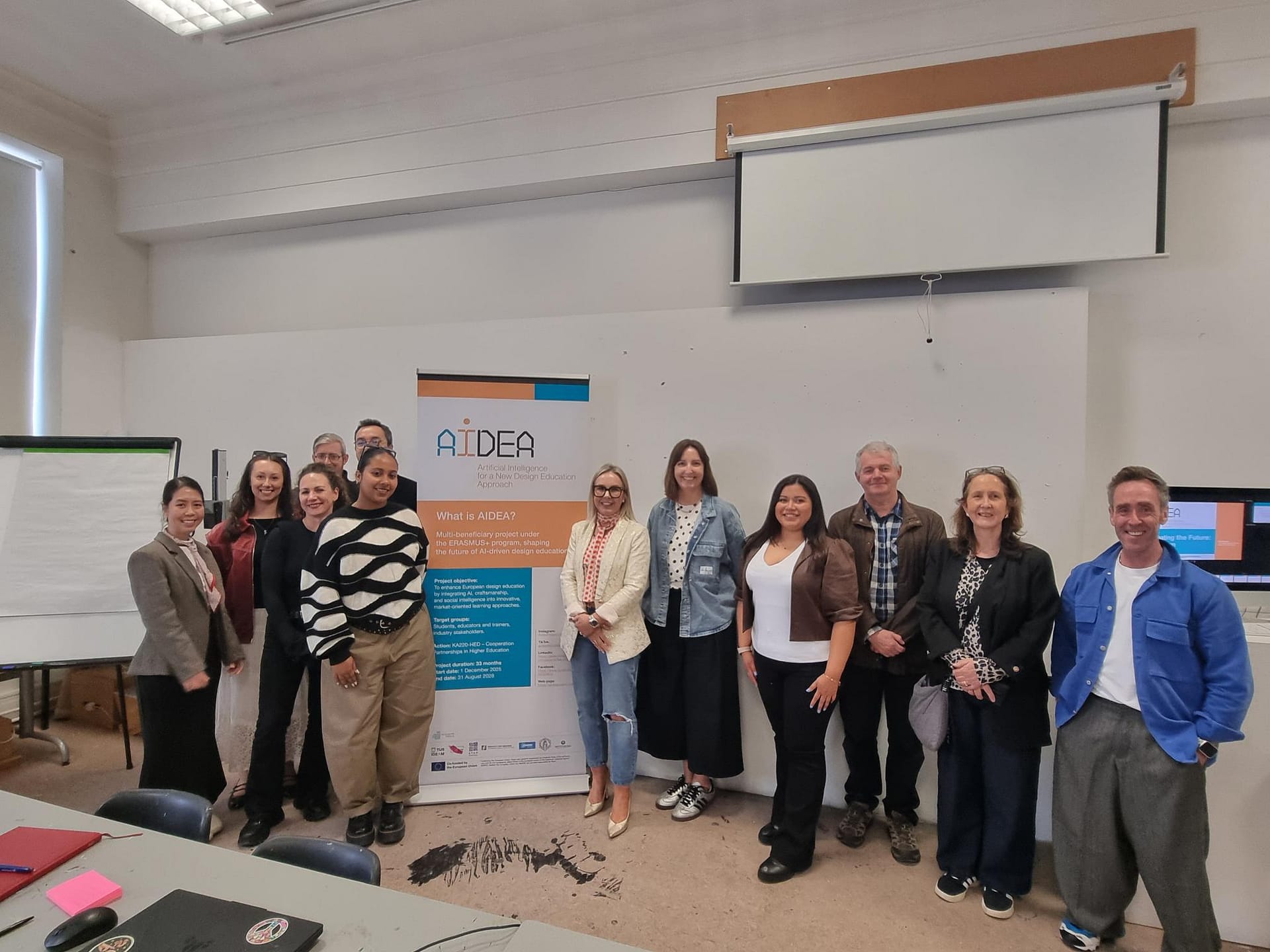
TUS hosted an AIDEA Focus Group and AI Workshop in Limerick School of Art & Design (LSAD), Ireland. As one of six focus groups taking place across six countries, the Technological University of the Shannon (TUS) focus group in Ireland is the focus of this article. The event brought together design students, lecturers and industry professionals to explore how artificial intelligence is shaping the future of design and creative education.
Overview
The focus groups aim to bring together the various stakeholders, including design students, lecturers and people working in the creative industries, to capture their experiences and perspectives on the use of AI in design processes. Their insights are crucial and will ensure that AIDEA project activities are informed by real-world needs and challenges.
Focus Group and AI Workshop
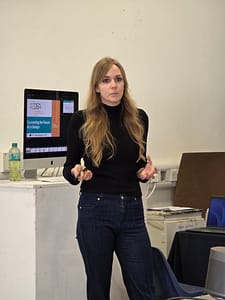
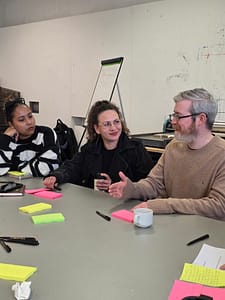
The focus group formed the first part of the day, opening up discussions on how AI is currently perceived within design education and practice. Participants examined the opportunities and challenges AI presents, considered its ethical and social implications, and identified the future skills and educational needs required to support meaningful AI integration into design curricula. The activity that was carried out involved dividing the team into two groups, who were then asked a series of open-ended questions. Each group was given time to discuss the questions and record their responses before sharing their thoughts and ideas with the wider group. Across groups, AI was seen as a valuable tool for efficiency, speeding up ideation, prototyping, and technical execution. However, significant concerns recurred, such as copyright and IP ambiguity, job displacement (particularly marketing/advertising), aesthetic homogenisation, and over-reliance eroding critical thinking and craft skills. Teachers highlighted risks of dehumanised, mediocre output and pressure from clients expecting faster, cheaper work due to AI. On skills needed, critical/ethical judgement, prompt literacy, and domain expertise were prioritised over technical proficiency alone, with calls for AI literacy to begin at school age. For education integration, participants called for AI to be taught as a formal tool/module (not tested before being taught). Overall, opportunity and risk were seen as closely intertwined, with equitable access and human-centred judgement as recurring priorities.
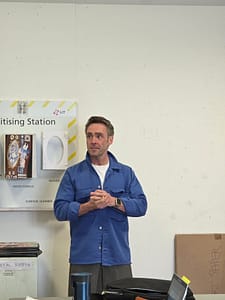
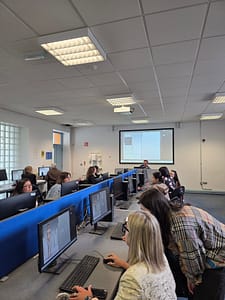
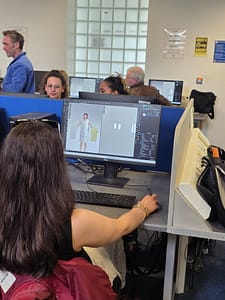
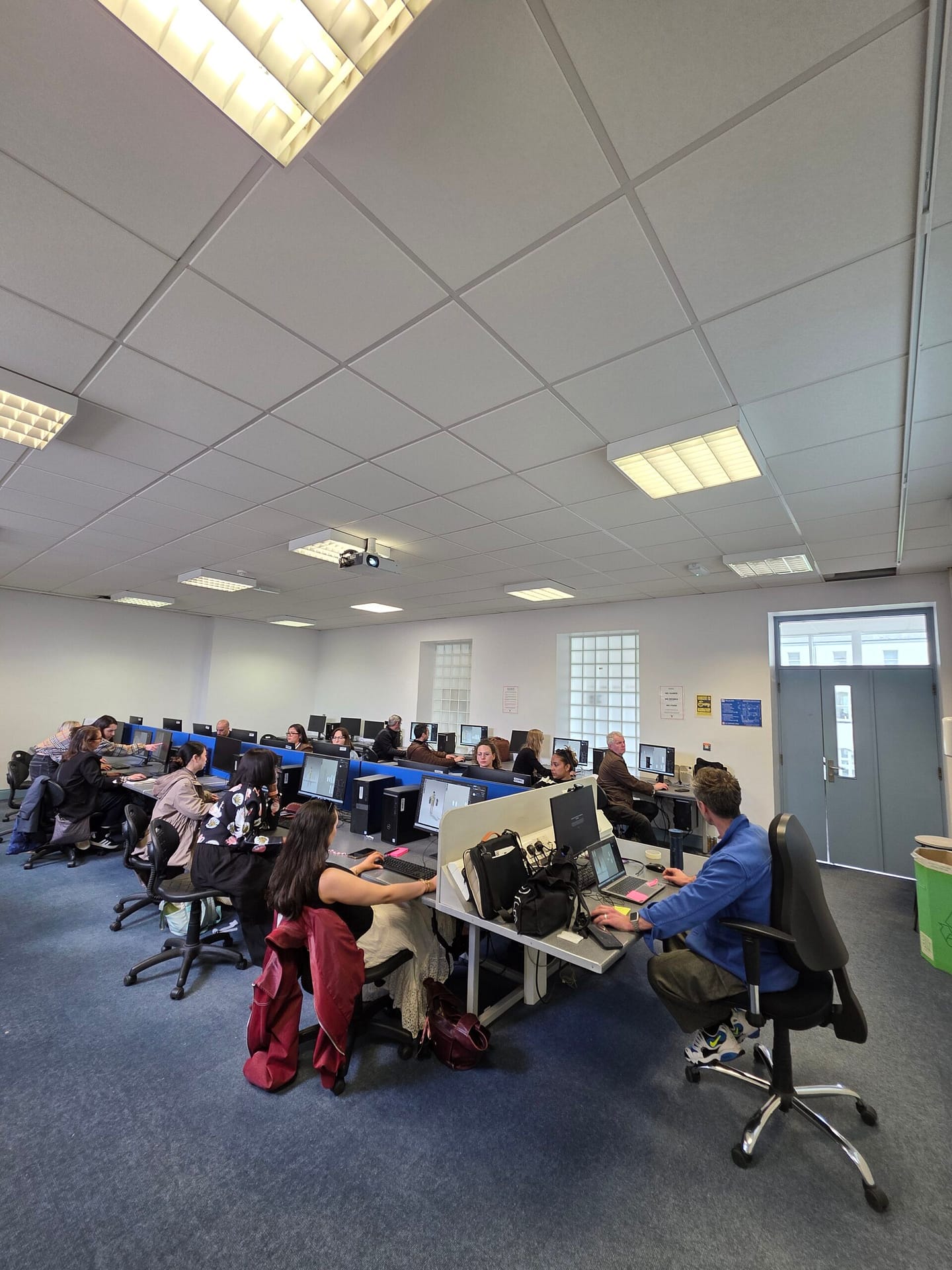
The second part of the day was a hands-on AI Design workshop, delivered by Alan Kelly, Senior Lecturer and Joint Programme Co-Ordinator of the B.A. Fashion Design at LSAD. The workshop explored how digital tools, including CLO 3D fashion design technology, can be combined with AI to support fashion design workflows and creative practice, giving participants practical experience of applying these tools in real design scenarios. The event forms part of the wider AIDEA Project, an initiative focused on integrating AI into design education across Europe and reflects the project’s ongoing engagement with academic institutions and industry practitioners.
The key message is that AI can free up time for creativity if its use is deliberate, ethical, and paired with critical thinking. The most recurring points are the need to keep humans involved at both ends of the creative process (initial idea + final approval), the urgency of training educators first, and the importance of equitable access to AI tools.
Next Steps
The next phase involves compiling the information collected from all focus groups, with the findings to be published in the Participatory Analysis Report. The insights and perspectives gathered from participants at LSAD will feed directly into the AIDEA Project’s ongoing work to shape how AI can be meaningfully integrated into design education and creative practice across Europe.
By Holly Jordan, TUS, 21st July 2026





Funded by the European Union. Views and opinions expressed are however those of the author(s) only and do not necessarily reflect those of the European Union or the Erasmus+ National Agency INDIRE. Neither the European Union nor INDIRE can be held responsible for them.